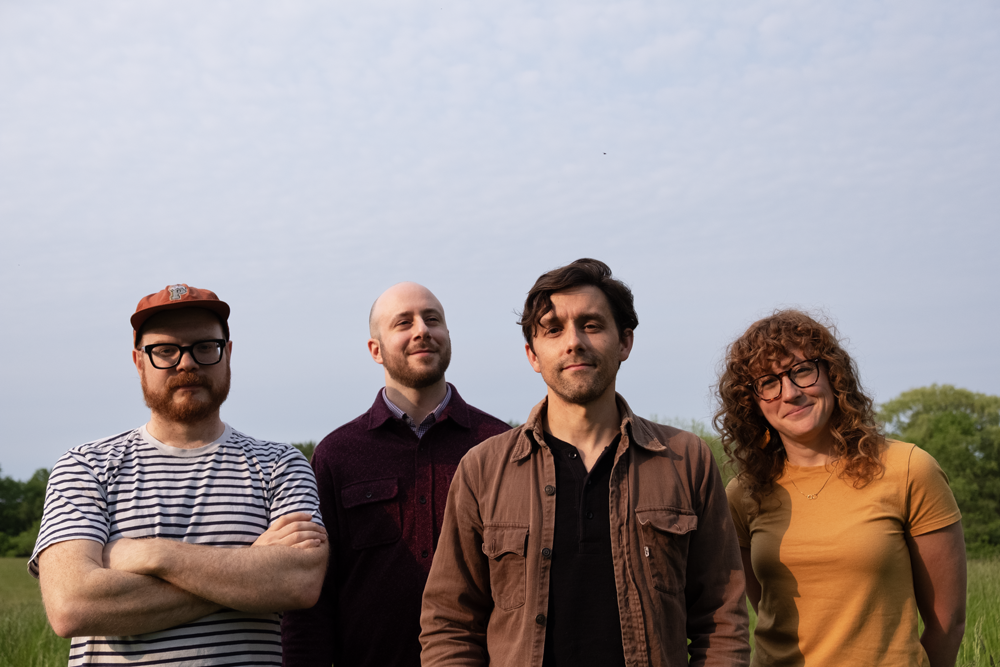
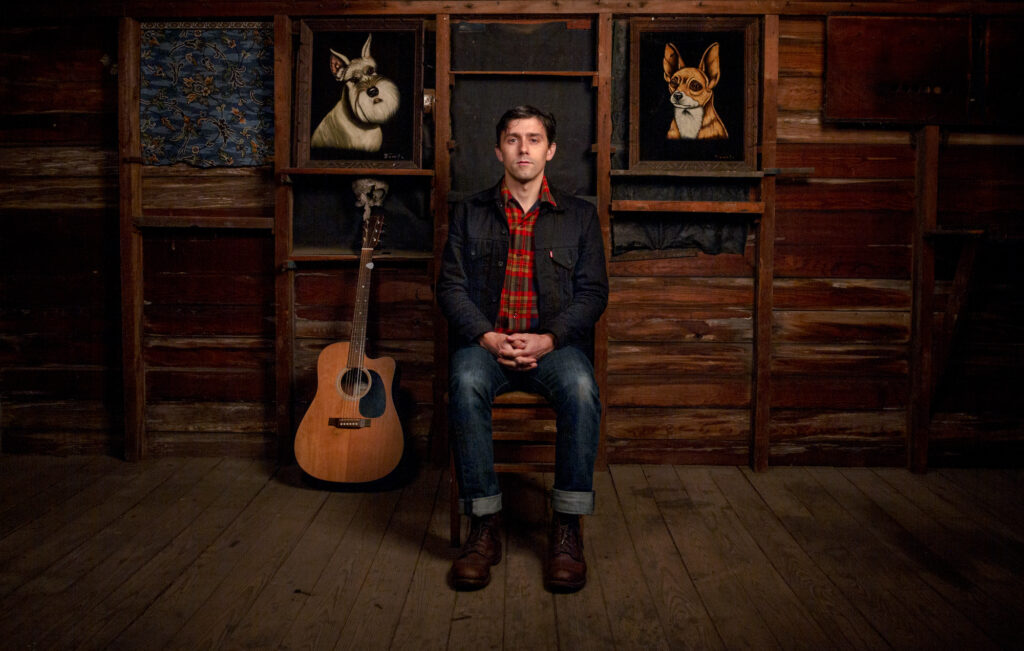
Lou DiPietro found punk in the backwaters of rural Western New York, picked up guitar, and basically never put down the instrument. He’s been writing songs and performing as Louiston ever since. That’s well over 20 years now: two decades-plus of gigs up and down the East Coast, in taverns, coffeehouses, living rooms and backyards, libraries, museums, a roofless bunker, a couple of grocery stores, a sushi bar, and some festivals; several self-produced records crafted and honed during New York’s harsh winter months; long spells of creative doubt punctuated with fleeting bursts of self-reverence, and the perpetual renegotiations required of (most) artists navigating adulthood’s increasing complexities and demands. Typical DIY musician stuff.
There were sojourns in Jersey and North Carolina, careers as a librarian and journalist. Somewhere in there, Lou became an artist and a lifer in songwriting and performing. He became a producer, sound engineer, designer, and – perhaps most unexpectedly – a singer. And Louiston became a band, trading in tight, up-tempo tunes with three- and four-part harmonies, tasteful guitar work, and lyrics that soothe and burn when they must.
Based in Ithaca and Trumansburg, NY, in the heart of Upstate New York’s Finger Lakes region, Louiston’s acoustic-centered Americana isn’t exclusively folk, indie, rock n’ roll, country, bluegrass-ish nor ragtime; it’s all of those genres – and more – mixed into the pot and simmered over medium heat, with dashes of melodic skate punk and bebop jazz to taste.
Accompanying Lou (vocals/guitars) are musical heavyweights Colleen Countryman on keys, Scottie Nelson on bass, Chris Ploss (owner and operator of Sunwood Recording) on drums, and, occasionally, Joey Arcuri (Driftwood) on bass. “Tiny Devastations in Granular Living,” out now, is Louiston’s third formal album and the first with this lineup.
This week, the band cites Neko Case, Django Reinhardt, Lifetime, and a thousand other bands and artists as influences.